Don't miss our holiday offer - up to 10% OFF!

Abdominal Belt in Pakistan: Size Guide, How to Wear, Benefits & FAQs
Buying an abdominal belt in Pakistan? Learn how to choose the right size, how to wear it correctly, and what benefits to expect. Includes FAQs and tips for Lahore.

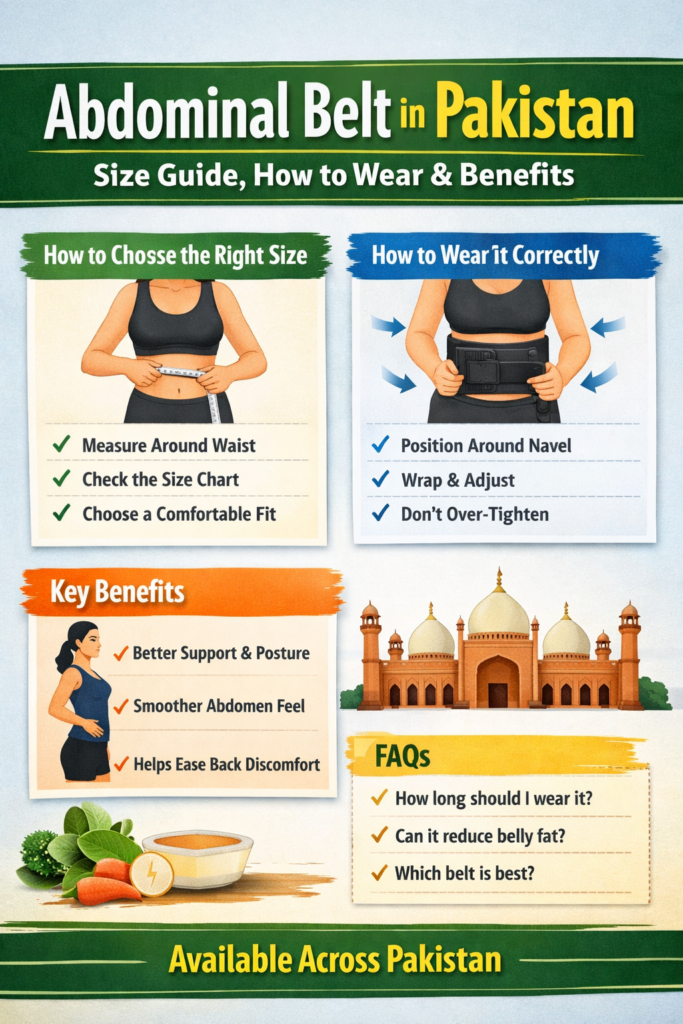
Abdominal Belt in Pakistan: Size Guide, How to Wear, Benefits & FAQs
If you’re searching for an abdominal belt in Pakistan, you’re probably looking for one of these things:
better core/abdomen support during daily routine
a more secure feel for your midsection
help with posture and “tummy support”
a belt that fits correctly and doesn’t roll up
The good news: abdominal belts can be very useful—if you choose the right size and wear it correctly. Most people don’t get results because they buy the wrong size, wear it too high/low, or over-tighten it.
This guide is written for customers in Pakistan (including Lahore), and it covers sizing, wearing technique, benefits, and common mistakes.
Note: This is general guidance, not medical advice. If you are post-surgery, have a hernia, severe pain, breathing issues, or a medical condition, confirm with your doctor before using an abdominal binder/belt.
What is an abdominal belt?
An abdominal belt (also called an abdominal binder or tummy support belt) is a supportive wrap worn around the midsection. Most belts use elastic or compression fabric with adjustable straps/Velcro to give the abdomen a firm, secure feel.
People commonly use it for:
daily abdominal support
posture support during routine activities
postpartum support (only if appropriate for your situation)
comfort during long sitting/standing hours
fitness routines (light support; not a substitute for core training)
On an eCommerce site like Mediifitt, this is a high-intent product—people usually search when they need it, which is why this topic can bring good SEO traffic.
Abdominal belt vs compression belt
This depends on how you name products, but generally:
Abdominal Belt
focused on midsection support
often wider and designed to cover more of the abdomen
good for daily wear and “tummy hold”
Compression Belt
often tighter, more “sports/compression” oriented
sometimes used for workouts or firm shaping feel
may feel more restrictive if you size down
Simple rule:
If your priority is comfort + daily support, abdominal belt usually wins. If your priority is firmer compression feel, compression belt may feel stronger.
Internal linking tip (for SEO): In this section, link to your Abdominal Belt product and Compression Belt product using descriptive anchor text like “abdominal belt in Pakistan” and “compression belt for abdomen support”.
Abdominal belt benefits
A good abdominal belt can help with:
1) Better support and “held-in” feeling
It can make your abdomen feel more stable during daily movement (standing, walking, chores, office work).
2) Posture comfort
Many people feel less strain when they sit/stand for long hours, because the belt encourages a straighter posture. This can indirectly reduce discomfort caused by slouching.
3) Confidence in clothing fit
Some users like the smoother feel under clothes. (Just keep expectations realistic—it’s support, not magic.)
4) A gentle reminder to engage your core
It can remind you not to relax your posture completely.
What an abdominal belt does not do:
It does not permanently “burn fat” on its own
It does not replace exercise or healthy nutrition
It does not guarantee medical outcomes
Keeping your claims realistic is important for trust and long-term SEO.
How to choose the right abdominal belt size
Sizing is the #1 reason people hate their belt (rolling, discomfort, or “not working”).
Step 1: Measure your waist properly
Use a measuring tape:
Stand normally (don’t suck in your stomach).
Measure around your abdomen at the level where you want the belt to sit (usually around the navel area).
Note the measurement in inches or cm.
Step 2: Use the brand size chart
Every brand’s belt sizing is slightly different. Always match your measurement to the product size chart.
Quick fit rule:
If you want everyday comfort → choose the size that matches your measurement
If you want very firm compression → don’t size down aggressively; it usually causes rolling and breathing discomfort
Step 3: Check belt width and body type
Short torso: very wide belts can dig into ribs/hips
Long torso: wider belts may feel more supportive
Step 4: Decide between single belt vs “abdominal belt pair”
If your product is a pair (two bands), it’s usually designed to give:
one band for compression/support
another band for positioning / extra lift feel and posture comfort
A “pair” can be helpful for users who want a more customized feel (tightness in one zone, comfort in another).
How to wear an abdominal belt correctly (so it doesn’t roll)
This is the method that works for most people.
Step-by-step wearing guide
Start on a thin layer
Wear it over a thin cotton shirt/tank top if your skin is sensitive.Position it correctly
Most people should center it around the navel area, not too high near ribs and not too low on hips.Wrap while exhaling normally
Exhale gently (don’t force it), then wrap and secure the belt.Tighten in stages
Don’t fully tighten at once. Secure it lightly first, stand/walk for 30 seconds, then adjust.Check 3 comfort points
You can breathe normally
You can sit without pain
The belt doesn’t fold/roll at the edges
Common wearing mistakes
Wearing it too high (causes rib pressure)
Wearing it too low (causes rolling on hips)
Over-tightening (causes discomfort and makes rolling worse)
Wearing directly on sweaty skin (causes irritation)
How long should you wear it per day?
For most everyday users:
Start with 1–2 hours/day for 2–3 days
Increase gradually to 3–6 hours/day if comfortable
Avoid sleeping in it unless a clinician specifically told you to.
If you feel:
numbness/tingling
shortness of breath
pain, heartburn, or severe discomfort
Stop and loosen/remove it.
Best use cases (Pakistan lifestyle examples)
Office work / long sitting hours
If you sit a lot, posture tends to collapse. A belt can help you feel more “supported,” but you should also:
stand and stretch every hour
strengthen your core gradually
Household routine
Many people wear it during chores, cooking, cleaning, and feel more stable.
After pregnancy (postpartum)
Some users look for postpartum support, but the “right time” depends on your body and delivery type. It’s best to be cautious with wording and practice:
start gentle
avoid extreme tightness
consult your doctor if you had surgery/C-section complications
Abdominal belt care (so it lasts longer)
Hand wash with mild detergent
Air dry (avoid high heat)
Don’t fold Velcro onto fabric (it damages elasticity)
Frequently Asked Questions
Which abdominal belt is best in Pakistan?
The best belt is the one that fits your measurements, doesn’t roll, and feels comfortable for daily use. Look for strong stitching, breathable material, and adjustable compression.
Can an abdominal belt reduce belly fat?
It can make the abdomen feel more supported and look smoother under clothing, but fat loss requires nutrition + activity consistency.
Does an abdominal belt help back pain?
Some users feel posture support helps reduce discomfort caused by slouching. For ongoing or severe back pain, confirm the cause with a professional.
Can I wear an abdominal belt while working out?
Light workouts: many people do. For heavy training, don’t rely on it as a replacement for proper form and core strength.
How do I stop my belt from rolling up?
Correct size + correct placement + avoiding over-tightening solves most rolling issues.